

This article is a part of our series, NFL QB Archetypes.
Coverage Readers are one of the elite QB Archetypes.
Coverage readers throw to receivers based on what the defense is doing, not based on what the play was designed for them to do.
What Other QBs Do
Average QBs throw to a receiver based on what the play call tells them to do (A.K.A, the read progression).
Most good QBs and elite QBs will usually throw to a receiver based on the playcall, but not always – because they can recognize in real time (after the ball is snapped) that the playcall might not work against the defense they see.
But this works for basic coverages the defense shows – blitzes, the difference between middle-field open vs middle-field close, etc.
What Coverage Readers Do
Coverage Readers are a type of elite QB that can quickly process more complex defenses in real time- like if the defense is doing a Cover 6 vs Cover 3, or if the safety might come down to rob – meaning that ‘the Cover 2 look they showed is actually a Cover 1 robber’.
To put it simply, Coverage readers make their decision to throw the ball almost exclusively based on the defense they see in real-time, rather than based on the playcall itself. This is what allows them to avoid being reliant on their first read or the perfect playcall.
They don’t have to go through all their reads in order – they can skip their read progressions altogether almost every time if necessary to find the open receiver even if that receiver wasn’t the first read. Or even develop their own read progression.
Also, because of their ability to quickly and calmly recognize the defense, their offense can be built around it – the offense will incorporate option-routes – where their receivers change their routes on the fly depending on the coverage they see.
This requires the receiver and QB to be on the same page, generally. Or else interceptions can happen where the two are not on the same page.
It requires great real-time processing to do this, and great memory. It is very difficult, hence why most QBs do not have this playstyle for very long in their careers.
Coverage readers, like elite play executors, also master the fundamentals at a high level – good mechanics, footwork, accuracy, etc. And usually have other elite traits like a strong arm and accuracy with a quick release (since you are making decisions very quickly), and ability to change plays at the line and an overall strong command of the offense.
And they also have full authority over the offense with regards to audibles.
Examples:
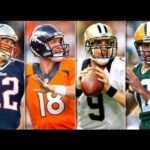
GOAT – Tom Brady
Tom Brady is the GOAT Coverage Reader, by far. It’s why some of his most impressive seasons were in years where the Patriots receiving corps wasn’t very good. (A great example of this is in 2013, where the Pats did not resign Wes Welker, Aaron Hernandez went to Jail, Gronkowski was injured, and receivers like Kenbrell Thompkins and Aaron Dobson were playing heavy snaps, and Edelman was playing full-time at receiver for the first-time after only occasionally spending time on special teams).
It’s also why Brady never sucked when the team changed offensive coordinators.
His ability to process is also why he is so reliable in crunch time.
Brady from the very start of his career in 2001 already showed signs of this. It’s why Belichick was impressed enough to keep him on the roster in 2000 despite already having multiple QBs, and why he kept Brady as the starter and never looked back even when Bledsoe was healthy.
It is what makes Tom Brady the GOAT. He doesn’t have the amazing physical talent.
Good
As explained before, it is difficult, and most QBs don’t last playing this style.
Dak Prescott in 2022 played in an offense with a lot of option-based routes. He was good this year, but he also threw a lot more interceptions than he typically has since he’s entered his prime. Some of these were off receivers’ hands, but many were also the result of Dak and his receivers not being on the same page, or Dak not interpreting the defense correctly.
Justin Herbert also played in a similar offense in 2022 under Joe Lombardi. It’s why he didn’t look as smooth as he did in 2020 during his rookie year when Shane Steichen was the offensive coordinator.
Conclusion
A coverage reader/processor is not a common archetype, because it is extremely difficult and can lead to interceptions if you are not good enough. When successful however, it makes the offense have an answer for any type of defense, even if the team doesn’t have an elite receiver.
This is why TB12 is da GOAT