This article is a part of our series, NFL QB Archetypes.
Elite Play Executor is the one of the elite QB Archetypes. It is exactly what it sounds like: a QB that executes the offense at an elite level.
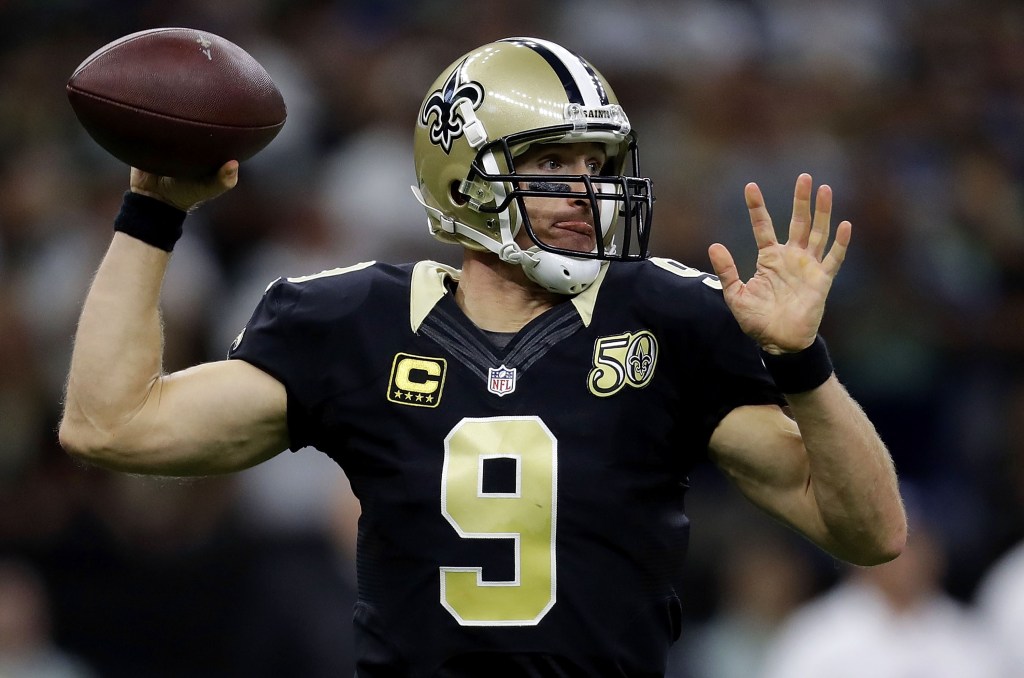
(Examples: Joe Montana, Drew Brees)
They master the fundamentals – accuracy, footwork, mechanics, pocket presence, protect the football and make good decisions if no one is open – with greater consistency and execution than average QBs.
And they have extra traits that make them elite: ability to recognize coverages, attack the blitz, throw with anticipation, occasionally run, and more freedom to make audibles. This is how they avoid relying on the perfect playcall.
They are the quintessential, elite pocket passer that many covet.
Advanced accuracy and throwing with anticipation
Elite play executors don’t just see it and throw it. Because of their great memory of the plays, they know where the receiver is going to go before he even goes there, so they can just throw to a spot.
Their accuracy is also much better than average, alongside their footwork. Hence why they can throw to a spot perfectly and the receiver can get there.
Better coverage recognition
They can recognize certain types of zone coverages (split-field vs single-safety, linebackers playing flat vs the middle) more consistently and quickly than average QBs do. This means that when the designated first-read isn’t there, they have an easier time knowing what other receiver will be open.
They are also good against the blitz!
This also helps them not become reliant on the perfect playcall. (Because that’s what being an elite QB is all about: having traits that prevent you from needing everything to be perfect).
Better scrambling ability
Elite play executors are better scramblers not just because of athleticism, but because they have a better feel for the pocket and knowing when they should run and how to navigate the pocket so they can run. It’s not a coincidence that QBs like Brees and Montana were known for the pocket presence. This helps them avoid taking bad sacks.
Much more authority at the line of scrimmage. They are given options to audible
Many OCs may limit their QBs ability to change plays. But these QBs are given the freedom to do more since they handle duress better than average, and know their playbooks.
Examples
GOATS
Joe Montana, Drew Brees
Very “Good” QBs
Brock Purdy – Purdy can scramble well, throw with anticipation, can pick up blitzes pre-snap, and has solid knowledge of the playback. What holds him back from being an elite play executor is that his arm strength limits the types of throws he can make. He can’t fire passes with strong zip, and his distance on deep balls is also limited. This means he may have to over-anticipate certain throws.
Conclusion
Elite Play Executors are what teams want much of their QBs to “graduate” into.